
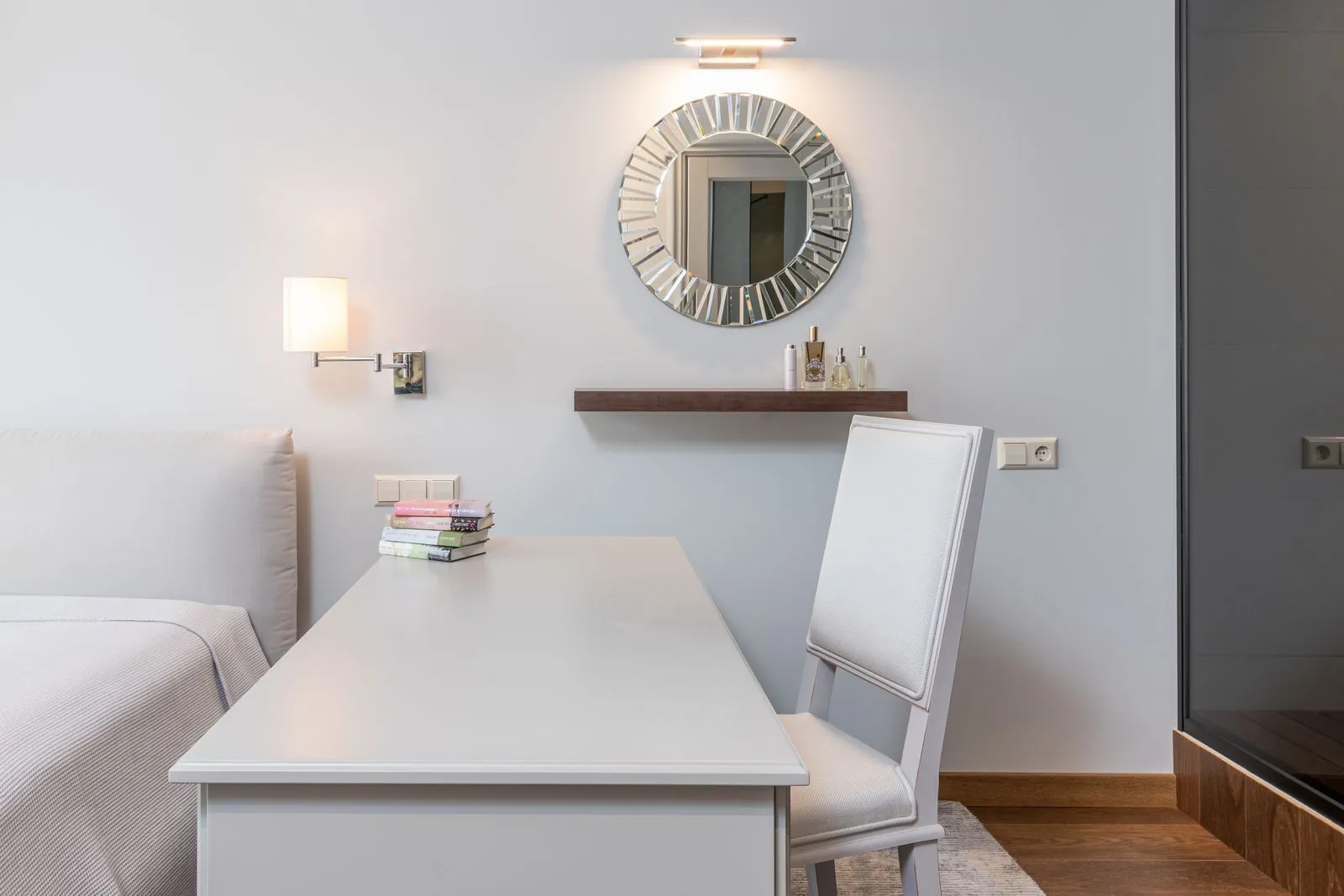
A shelf that looks level can still pull loose if its fixings do not match the wall or the weight it needs to hold. Before drilling, check what the wall is made of, what sits behind it, and how the shelf will be used. The right preparation helps protect your home and belongings. With a suitable drill, appropriate fixings, and a careful approach, many shelf installations are manageable; some call for professional help.
Identify the Wall Type
Solid brick or concrete feels firm across the surface and usually produces fine dust when drilled. Plasterboard, also called drywall, sounds hollow when tapped between studs. A stud wall has timber or metal supports behind the board; a stud finder can help locate them. Older homes may have lath and plaster, which can be brittle, so avoid assuming that a hollow sound means standard plasterboard.
Check for pipes and electrical cables before making any hole. Look for sockets, switches, radiators, and plumbing on both sides of the wall, and use a cable and pipe detector where appropriate. Detectors have limits, so follow the instructions and treat uncertain readings cautiously. If you cannot confidently rule out hidden services, stop and ask a qualified professional to assess the spot.
Match Fixings to the Wall
For solid masonry, use wall plugs and screws rated for the material and expected load. Drill with a masonry bit, choose a plug that fits the hole, and follow the fixing maker’s guidance on hole depth and screw size. Do not use a plug that spins freely or sits loosely; it will not grip properly. Brush or vacuum dust from the hole if the instructions recommend it.
For plasterboard, the strongest option is usually to fasten into a timber stud using suitable screws. If a stud is not where the bracket needs to go, select a plasterboard anchor designed for the board thickness and load. Metal cavity anchors and other specialist fixings can work when installed correctly, but each has limits. Check the package rating and remember that a shelf’s contents add weight.
If the shelf has several brackets, use fixings suited to every mounting point and space brackets according to the shelf maker’s instructions. A long shelf or one holding heavy items puts more leverage on the wall than a small display shelf. When the load is uncertain, choose a more secure mounting position or get advice rather than relying on a fixing’s headline rating alone.
Install and Check the Shelf
Measure the position, mark the bracket holes, and use a level to keep the shelf straight. Confirm that the bracket sits flat against the wall before tightening screws. Drill at the correct angle and depth for the fixing, and stop if the bit meets unexpected resistance or the wall begins to crumble. Never force a screw into a hole that does not line up.
After mounting, check that every screw is secure and the brackets do not shift. Add items gradually, keeping heavier objects close to the wall and within the shelf’s stated capacity. Recheck the shelf after loading it and periodically afterward, especially if children might pull on it. If it tilts, creaks, or loosens, remove the contents and fix the problem before using it again.
Know When to Call a Handyman
Get help if you cannot identify the wall, suspect hidden wiring or plumbing, or find that the surface is cracked, crumbly, or unusually thick. A handyman can assess the mounting points, select compatible fixings, and install brackets where the wall can support them. Seek professional advice for heavy shelves, awkward locations, or installations above beds, seating, and other places where a falling shelf could cause injury.
Help is also sensible if you lack the right drill or detector, cannot safely reach the installation area, or have tried a fixing that will not hold. Avoid patching over a failed hole and reusing it without checking the surrounding material; damaged plasterboard or masonry may need repair or a different mounting point. A secure result matters more than finishing the job in one go.
Safe shelves start with the wall, not the drill: identify the material, check for hidden services, and use fixings rated for the shelf and its contents. If the wall is damaged, the load is heavy, or anything feels uncertain, pause and get professional help. London Fix & Finish can help with shelf installation when you would rather leave the drilling to a handyman.